Why Smart Collectors Are Quietly Stacking Air Jordan 18s While Everyone Else Chases Collabs
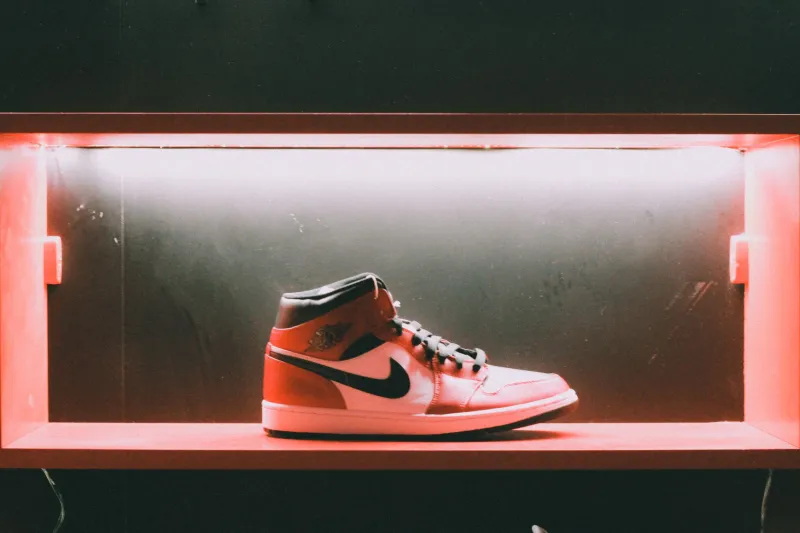
Every few weeks, the sneaker world has a new obsession. A collab gets announced, Twitter erupts, bots sell out every pair in 11 seconds, and resale prices spike to three or four times retail before most people even saw the product page. It's exciting. It's chaotic. And for most buyers, it's a losing game.
Meanwhile, something different is happening in the corners of the market where the noise doesn't reach. Collectors who've been doing this long enough to know better are quietly picking up Air Jordan 18s — sometimes at outlet prices, sometimes in near-deadstock condition from resale platforms — and sitting on them. Not because they're trendy. Because they're not.
The Hype Tax Is Real, and Most People Are Paying It
Let's be direct about what chasing limited collabs actually costs you. When a high-profile Jordan collab drops — think Travis Scott, Off-White, or any name-brand designer tie-in — the retail price is already inflated compared to a standard retro. You're paying a premium before the shoe even hits the secondary market. Then resale adds another layer. A collab that retails at $180-$200 might hit StockX at $400-$600 in the first week.
Here's where it gets painful for buyers who treat sneakers as investments: a significant portion of those hyped releases decline in resale value within six to eighteen months. The spike is real. The staying power often isn't. Once the cultural moment fades, once the influencer moves on to the next thing, prices normalize — sometimes below what the early resale buyer paid.
Compare that to the Air Jordan 18. Retail on retro pairs typically lands in the $180-$225 range depending on colorway. On StockX and GOAT, deadstock 18s in popular colorways like the Black/Chrome or the Sport Royal have held or appreciated modestly over multi-year windows. They're not explosive. They're stable. And for anyone who picked up pairs at outlet prices — sometimes as low as $90-$120 — the math looks even better.
Underrated Doesn't Mean Underperforming
Part of why the AJ18 flies under the radar is aesthetic. It's a 2003 shoe designed during one of the more divisive eras in Jordan Brand history. The shroud, the violin-inspired stitching, the elevated heel — none of it screams "streetwear staple" the way a Jordan 1 or a 4 does. That's actually the point.
Because the AJ18 doesn't have the mainstream pull of those silhouettes, it never gets the frenzied release treatment. Nike doesn't need to create artificial scarcity around it. Retailers sometimes sit on pairs. That creates buying opportunities that simply don't exist for shoes the algorithm has decided are hot.
But collectors who understand Jordan history know the 18 is significant. It was MJ's last signature shoe before his second retirement. It debuted in a limited-edition package with a DVD of his career highlights. The design was intentional and polarizing in all the right ways. Shoes with that kind of backstory don't stay cheap forever.
What the Resale Data Actually Shows
Let's put some numbers behind this. According to publicly available data from platforms like StockX, the average resale premium on a Travis Scott Jordan 1 collab peaked somewhere between 250-400% above retail in the immediate post-drop window. Impressive on paper. But buyers who paid those peak prices and held for 18 months frequently saw their pairs settle 30-50% below what they paid.
The AJ18, by contrast, shows a different pattern. Pairs purchased at or below retail — especially from outlet channels — have shown modest but consistent appreciation over 24-36 month windows. The Sport Royal colorway, for example, has maintained resale prices roughly 20-35% above outlet purchase price across multiple tracking periods. That's not a moonshot. It's a slow burn that actually pays off.
For budget collectors, the distinction matters enormously. You're not looking for the shoe that makes headlines. You're looking for the shoe that's worth more when you need it to be.
The Collector's Mindset Shift
There's a cultural component here that goes beyond the dollars. Chasing every collab is exhausting. It's designed to be. The whole machinery of hype culture — the countdown timers, the raffle entries, the bot wars — is built to keep you anxious and spending. It benefits retailers and resellers, not collectors.
Building a rotation around the AJ18 is almost a philosophical counter-move. You're opting out of the dopamine loop and into something more deliberate. You're saying your collection is built on quality and knowledge, not on whoever happened to design the latest limited capsule.
That's not a knock on collabs in general. Some of them are genuinely great shoes. But making them the foundation of a collection is where a lot of buyers go wrong. The AJ18 works as a foundation. It's historically significant, aesthetically distinct, and consistently available below market if you know where to look.
How to Actually Build This Position
If you want to start taking advantage of the AJ18's quiet value, here's how to think about it practically.
First, target outlet and clearance channels before resale platforms. Nike Factory Stores and Foot Locker clearance events occasionally surface AJ18 pairs at significant discounts. That's your ideal entry point — below retail with room to appreciate.
Second, focus on colorways with historical significance or limited availability. The Black/Chrome, the Sport Royal, and any player exclusive-adjacent releases tend to hold better than general release colorways.
Third, be patient. The AJ18 is not a flip shoe. It's a hold. Buy a pair at the right price, keep it clean, and let time do the work while everyone else is busy panic-buying the next collab.
The sneaker market rewards knowledge over speed. And right now, the knowledge play is sitting quietly in a silhouette most people are still sleeping on.