Trade Your Way to a Better Rotation: The Sneaker Swap Playbook for Budget Collectors
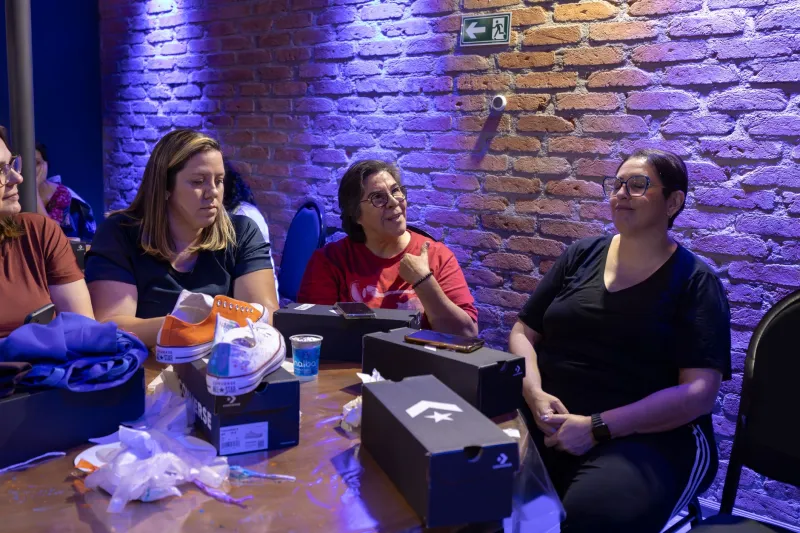
Everybody knows about StockX. Everybody's heard about GOAT. But there's a whole other layer of the sneaker economy that doesn't run on transaction fees, authentication delays, or platform algorithms — and it's where some of the sharpest budget collectors are quietly keeping their rotations fresh without ever touching retail markup or resale premium.
We're talking about the swap game. Peer-to-peer trading. Collector-to-collector exchanges where the currency isn't cash — it's pairs.
It's older than any sneaker app. And right now, it might be the single best tool available to budget Jordan buyers who want variety without the financial bleed.
Why Trading Works When Buying Doesn't
Here's the fundamental problem with constantly buying into the resale market: every transaction costs you money on top of the shoe's actual value. Platform fees, shipping, authentication charges — they add up. On a $120 pair, you might be absorbing $20-30 in friction costs before the shoe even hits your doorstep.
Trading sidesteps all of that. When two collectors agree on a swap, the exchange is direct. No middleman taking a cut, no authentication fee, no waiting for a payout. You hand over something you've worn enough, you receive something fresh to you. The rotation advances without the wallet taking a hit.
The psychological benefit is just as real. When you've already paid for a shoe, trading it away doesn't feel like losing money — because you're not losing money. You're converting one asset into another. That mental reframe makes it dramatically easier to keep your collection moving rather than hoarding pairs you've stopped wearing.
Finding Your Trading Community
The swap community isn't hidden, but it's also not advertised on billboards. Here's where it actually lives.
Discord servers are the most active hub for organized sneaker trading right now. Servers like Sneaker Traders, Kicks Exchange, and dozens of smaller regional communities have dedicated trading channels where members post what they have and what they're looking for. The culture in these spaces rewards transparency — post your pair's condition honestly, be upfront about what you want in return, and you'll build a reputation that gets you better offers over time.
To find the right server, start by searching "sneaker trade" or "Jordan swap" on Discord's discovery page, or ask in any sneaker subreddit (r/sneakers, r/Jordans) for current server recommendations. The active ones rotate, so real-time community intel beats any list we could publish here.
Facebook Groups are the local play. Search your city name plus "sneaker trade," "kicks swap," or "Jordan exchange" and you'll likely find at least one active group. These are gold for in-person meetups where you can physically inspect the pair before committing — a massive advantage over any online transaction. Chicago, LA, Houston, Atlanta, and New York all have thriving local swap communities. Smaller cities often do too; you just have to look.
Sneaker conventions and local events are underrated swap venues. Even if you're not there to buy from vendors, the floor is full of collectors who brought extras specifically to trade. Strike up conversations, ask what people are looking to move, and come prepared with your trade bait.
How to Value a Trade Fairly
This is where budget buyers sometimes get tripped up. Without a cash price anchoring the deal, it can feel hard to know if you're getting a fair exchange. The fix is simple: use market data as your baseline.
Before entering any trade negotiation, check the sold listings on eBay for both pairs — not the asking prices, the actual sold prices. That's the real market. If your pair is selling for $130 and their pair is selling for $160, you've got a $30 gap to negotiate across. Maybe they throw in a shipping label. Maybe you include a cleaning kit. Maybe the deal is just slightly in their favor and you accept that because the pair they have is exactly what you want.
Condition grading matters enormously in trades. Use a consistent scale: Deadstock (unworn, original box), Near Deadstock (tried on, maybe once), Very Good (light wear, no damage), Good (regular wear, minor flaws), and Fair (visible wear, needs cleaning or repair). Be honest about where your pair falls, and hold your trading partner to the same standard. Asking for photos of the toe box, heel, sole, and insole before agreeing to anything is standard practice — not an insult.
Negotiating Without Losing the Deal
The swap community runs on goodwill and reputation, so aggressive negotiation tactics that might fly on a resale platform can actually hurt you here. The approach that works is collaborative rather than combative.
Lead with what you're offering and why you think it's a fair trade, not with an opening lowball. If there's a value gap, acknowledge it and suggest ways to close it. "I know your pair books for a little more than mine — would you do the swap if I cover shipping both ways?" is the kind of offer that gets accepted. "Your shoe isn't worth what you think it is" is the kind of comment that gets you blocked.
Building a trade reputation takes time but pays off fast. After a few successful swaps, you'll have vouches from other collectors — and vouches unlock access to better trade offers from people who've been burned by anonymous traders before.
The Budget Buyer's Swap Strategy
If you're specifically working with a Jordan-focused collection on a tight budget, here's a practical framework:
Keep one or two pairs designated as "trade bait" — shoes you like but don't love, maintained well enough to hold their value. When something better crosses your radar in the swap community, you've got leverage ready to go.
Focus your trading energy on silhouettes with stable, predictable resale values. The Jordan 18 is particularly good trade currency precisely because its market price doesn't swing wildly — both parties can agree on what it's worth without a long negotiation. Hyped shoes with volatile pricing create disagreements; understated classics create clean deals.
And always, always inspect before you commit. In-person swaps are the safest. If you're trading remotely, use a platform with buyer protection for the first few exchanges with a new trading partner until you've built mutual trust.
The swap game won't replace buying entirely — sometimes you just need to spend. But as a complement to your regular shopping strategy, it's one of the most effective tools in a budget collector's arsenal. Your rotation will thank you.