The Sneaker That Means the Most Didn't Cost the Most: Why Cheap Grails Hit Different
Let's get something straight right out of the gate: a grail is not defined by its retail price. It's not defined by its resale value, its celebrity endorsement, or how many times it got posted on Sneaker Twitter before the drop. A grail is defined by what it means to you — and some of the most powerful sneaker stories I've ever heard involve shoes that cost less than $100.
The sneaker industry has done an incredible job of conflating price with worth. It's a brilliant marketing strategy, honestly. If you can convince consumers that a higher price tag signals higher cultural value, you've created a self-reinforcing loop where people pay more just to feel like they belong. But the collectors who've been at this the longest — the ones with the deepest rotations and the most genuine passion — will tell you something different. They'll point to a beat-up pair on the back shelf and say, that one. And the story they tell won't involve a raffle or a midnight line.
What a Real Grail Actually Looks Like
Derrick M. from Memphis has been collecting Jordans for about 15 years. His most prized pair? A worn-in Air Jordan 18 in White/Sport Royal that he grabbed at a Goodwill for $12 in 2014. "I know that sounds crazy," he laughs. "But those were the shoes I wore when I got my first real job offer. I had the interview, came home, changed into those kicks, and went out to celebrate. I've had shoes that cost ten times that amount. None of them come close."
That's not a unique story. It's actually the norm among collectors who've been doing this long enough to develop perspective. The shoes that carry weight are the ones attached to moments, milestones, and memories — not the ones attached to a receipt.
Tanya L. from Houston describes a similar experience with a pair of Jordan 6s she found at a DSW clearance event for $65. "Everyone in my crew was hunting the Travis Scott collabs that year. I wasn't trying to spend that kind of money. I found these 6s, they fit perfectly, and I wore them to my best friend's wedding. Now whenever I see them I think about that whole weekend. No collab is ever going to compete with that."
The Psychology of the Cheap Grail
There's something psychologically interesting happening when a low-cost sneaker becomes deeply meaningful. Part of it is the absence of financial anxiety. When you spend $400 on a pair of shoes, there's a constant background hum of I need to protect these, I need to wear these right, I need to make sure I get value out of this. That pressure changes your relationship with the shoe.
When you spend $60 or $80 or find something unexpectedly at an outlet store, that pressure disappears. You wear the shoes. You live in them. You bring them to the moments that matter. And because you're not treating them like an investment, they actually get to be what sneakers were always meant to be — footwear that moves through your life with you.
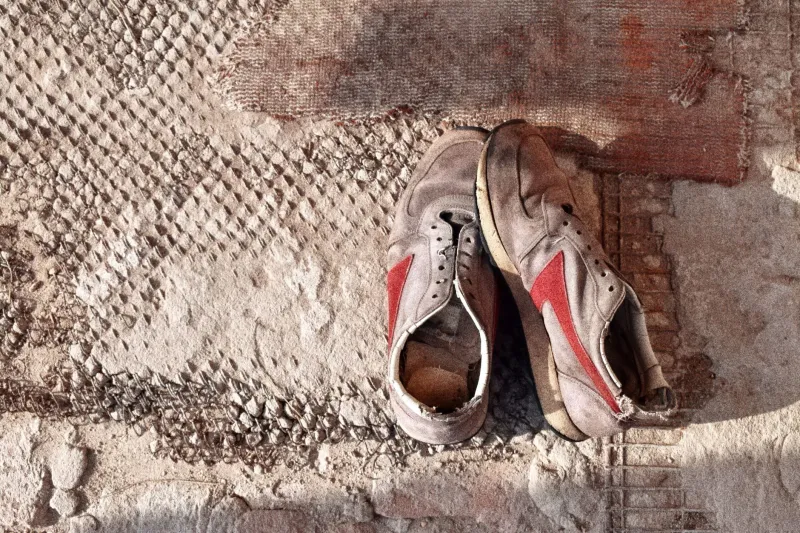
The cheap grail gets worn. And worn-in shoes carry stories that pristine deadstock never will.
How Finding Your Cheap Grail Rewires Your Whole Approach
Here's what collectors don't talk about enough: the moment you find a cheap grail, it fundamentally changes how you shop. Because now you have proof — personal, undeniable proof — that the price tag was never the point.
Once that shift happens, a few things follow naturally.
You stop chasing drops for the sake of chasing them. If a new release doesn't connect with you personally, you pass. The FOMO that used to drive your spending loses its grip because you already know the best stuff doesn't require you to set an alarm at 10 AM on a Saturday.
You start looking differently at budget options. Clearance racks, outlet malls, resale listings for less popular silhouettes — these stop feeling like consolation prizes and start feeling like hunting grounds. The Air Jordan 18 is a perfect example. It's been quietly sitting in that space for years, waiting for collectors who care more about the shoe than the status signal.
You build a collection that actually reflects you. Not the algorithm's idea of what a sneakerhead should own. Not whatever colorway got the most YouTube coverage this week. Your rotation starts to tell a story about your taste, your life, and what you actually value.
The Flex Nobody Talks About
There's a quiet flex that budget collectors understand and hype-chasers never figure out: knowing your stuff well enough to find value where others don't look. It takes real knowledge to identify an underrated silhouette, real taste to build a cohesive collection on a limited budget, and real confidence to rock a shoe that doesn't have a hype machine behind it.
Anybody can buy whatever StockX tells them is trending. That's not a flex — that's just following instructions. The collector who shows up in a clean pair of Air Jordan 18s and can break down the history of the shoe, the construction details, why the colorway works — that person has done the work. That person has something real.
Start With What Moves You
If you're newer to collecting and feeling the pressure to spend big to be taken seriously, here's the most honest advice you'll get: don't. Start with the shoes that actually move you. Dig into the history of silhouettes that don't have a waiting list. Hit the outlet stores, the clearance sections, the resale listings for shoes that haven't blown up yet.
Build a collection around meaning, not marketing. Your cheap grail is out there — and when you find it, you'll understand exactly what this whole thing was always supposed to be about.
The price tag is just a number. The story is what lasts.