The Five-and-Dime Rotation: Hunting Jordans in Thrift Aisles, Consignment Bins, and Parking-Lot Meetups
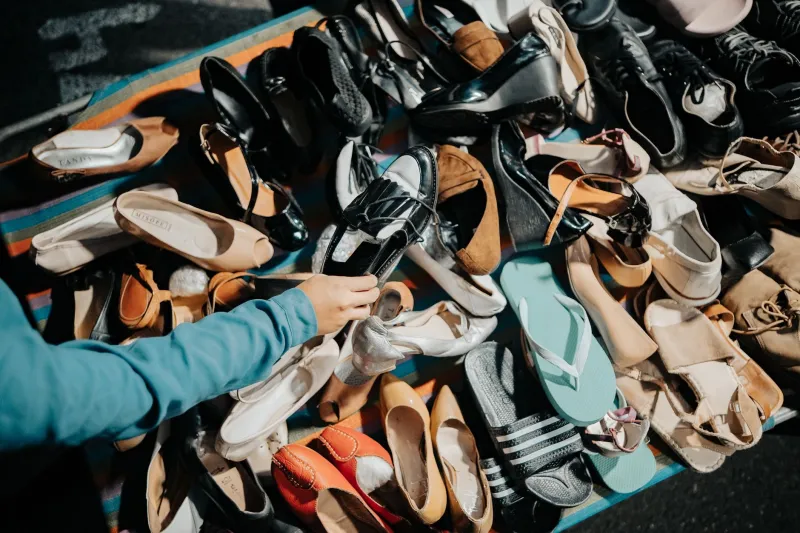
There’s a certain kind of Jordan buyer who never opens a sneaker app. They carry a flashlight, a tape measure, and a folded-up plastic bag in the trunk. They know which Goodwill sits near the wealthy ZIP code, which consignment shop actually authenticates, and which church rummage sale is worth a Saturday morning. This is the five-and-dime rotation — five slots in your lineup built from charity shops, consignment bins, and local pickup tables.
Where clean pairs actually show up
Not every thrift channel is created equal. The goal isn’t to find the most Jordans; it’s to find the cleanest pairs before someone else does.
Suburban charity shops near affluent ZIP codes. Goodwill and Salvation Army stores in wealthier suburbs consistently produce better donations. Look for stores near high schools with active sports programs — kids outgrow shoes fast, and parents donate rather than resell. Go on weekday mornings; weekend crowds pick the shelves clean.
Savers and larger thrift chains. These stores often have a dedicated shoe aisle with better organization than small charity shops. Check the men’s athletic section and the women’s section — unisex Jordans sometimes get mis-shelved by size. A women’s 10.5 is a men’s 9, and that mistake can work in your favor.
Consignment shops with a sneaker policy. Plato’s Closet and local consignment stores filter out beaters, but their pricing can be inconsistent. A store that doesn’t know sneakers may price an Air Jordan 18 like a generic basketball shoe. That’s your opening. Ask when they restock and whether they hold items.
Estate sales and church rummage sales. These are hit-or-miss, but the misses are cheap. Bring cash, arrive early, and check boxes under tables. Estate sales often list photos online the night before — scan for shoe racks in the background.
Local pickup tables and swap meets. Facebook Marketplace and local sneaker groups still matter, but the real action is the parking-lot meetup or monthly swap. You get to inspect in person, negotiate face-to-face, and skip shipping fees. Just keep it public and bring a friend.
The five-minute inspection
You don’t need to be a professional authenticator to avoid a bad pair. You need a routine. Five minutes per shoe is enough to catch the deal-breakers.
- Flip the shoe. Look at the outsole wear pattern. Heel drag is normal; uneven wear on the forefoot or a worn-through pivot point means the cushioning is probably shot.
- Press the midsole. Cracks, crumbling foam, or a squishy feel around the heel are red flags. Jordan midsoles can dry out, especially on older pairs.
- Check the interior heel lining. Holes or heavy pilling mean the shoe was worn hard without socks or with a loose fit. That’s a comfort problem you can’t fix cheaply.
- Look at the insole. A missing or sliding insole is a bargaining chip, not a deal-breaker. A heavily compressed insole with a visible foot imprint tells you the shoe has real miles.
- Inspect the stitching and glue. Loose threads are minor. Sole separation at the toe or heel is a repair bill.
- Smell it. Mildew doesn’t come out easily. If it smells like a basement, walk away.
For Jordans specifically, check the size tag inside the tongue and the heel logo. A blurry Jumpman or uneven stitching can signal a fake, but at thrift prices, condition matters more than provenance. If the price is low enough and the shoe is clean, a replica isn’t worth the risk — just don’t pay collector money for an unverified pair.
Negotiating at pickup tables
Local pickup tables are where manners and math meet. The seller wants to move inventory; you want a fair price. Don’t lowball, don’t gush, and don’t negotiate against yourself.
Start with a bundle. “I’ll take these two for $X” gives the seller a reason to discount without insulting the individual pair. Know your comps before you arrive — check sold listings for the same size and condition, not asking prices. Point out flaws politely: “The heel drag is heavier than the photos showed, so I’d be at $X.” Then stop talking.
Set a walk-away number before you leave the car. Cash talks, but only if you’re willing to keep it in your pocket. Public meetups — police station parking lots, busy coffee shops, mall entrances — are non-negotiable. If the seller won’t meet in public, the deal isn’t worth it.
Building the starting five
A rotation needs roles, not just pairs. Fill these five slots and you’ll stop buying random bargains:
- The daily beater: A clean, dark-colorway Jordan you can wear in the rain.
- The white pair: For warm-weather outfits and quick errands. Keep them clean.
- The dark horse: A model nobody else is hunting, like an Air Jordan 18, that you got for under $80.
- The trade bait: A clean pair in a common size that you can flip or swap later.
- The grail: The one pair you actually wanted, even if it took six months to find.
The thrift hunt is slower than a drop day. That’s the point. You’re not competing with bots — you’re competing with everyone who slept in. Bring a flashlight, measure the insole, and remember that the best thrift-store Jordans are the ones you inspect twice and still walk away from the first time.