Stop Buying Your Size and Start Buying Your Foot: The Jordan Fit Guide That Prevents Expensive Mistakes
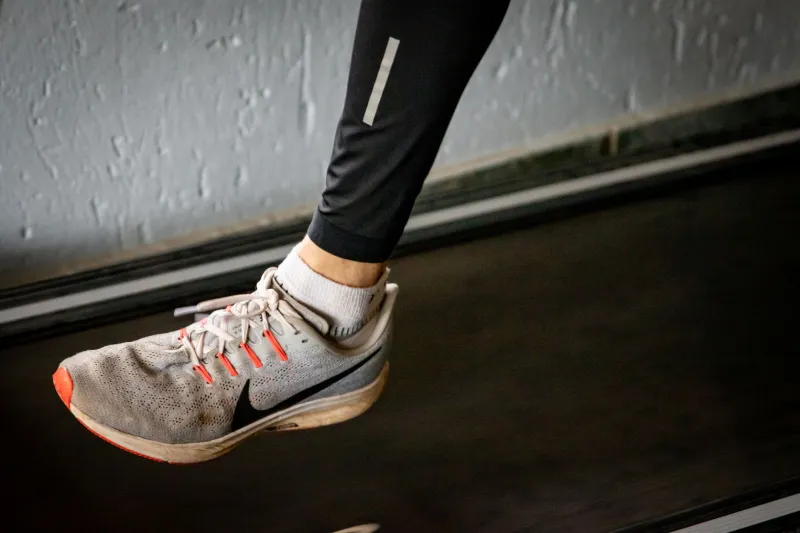
Here's a scenario that happens more than anyone wants to admit. You find a pair of Jordans at a killer price — outlet bin, resale platform, Facebook Marketplace — and you cop in your usual size. They arrive, you lace them up, and something is off. Maybe the toe box is crushing your pinky toe. Maybe your heel is slipping with every step. Maybe the arch support is in the wrong place entirely. The shoe isn't bad. It just doesn't fit your foot.
Now you're stuck. If it's a final sale from an outlet or a resale purchase with no return policy, you've either got a pair that doesn't work for you or you're eating the cost of selling it and starting over. That's not a budget move — that's a budget disaster.
The fix isn't complicated, but it does require knowing something most casual buyers skip: the difference between your size and your foot shape, and how Jordan silhouettes vary dramatically across both.
Why "True to Size" Is the Most Useless Phrase in Sneakers
Every sneaker review eventually says it: "these run true to size." It sounds helpful. It's almost meaningless without context. True to size compared to what? Compared to a Nike running shoe? A Converse? A dress shoe? And true to size for whose foot?
Jordan sizing is especially tricky because the brand spans decades of footwear design, with each silhouette built around different performance needs and manufacturing standards. A Jordan 1 fits differently than a Jordan 11. A Jordan 18 fits differently than a Jordan 4. And within each model, your specific foot geometry — not just your length — determines whether you're comfortable or miserable.
For budget buyers, this matters most when you're shopping channels where you can't try before you buy and can't return if something's off.
Know Your Foot Before You Know Your Size
Before you can apply any silhouette-specific guidance, you need a basic read on your own foot shape. You don't need a podiatrist for this — just a piece of paper, a pen, and five minutes.
Trace your foot on paper and look at a few key things:
Toe box width — Do your toes spread wide, or do they stay relatively narrow? If your widest point is significantly wider than the ball of your foot, you have a wide forefoot and you'll need to account for that in toe-box-heavy silhouettes.
Heel width — Is your heel noticeably narrow relative to the rest of your foot? A narrow heel in a wide-last shoe means slip. That's a comfort and wear issue that's hard to fix without aftermarket insoles or heel grips.
Arch type — Flat feet, neutral arches, and high arches all interact differently with Jordan midsole designs. High arches in particular can cause discomfort in shoes with flat or minimal arch support built in.
Foot length vs. volume — Some people have a size 11 foot that's relatively low-volume (thin top-to-bottom). Others have a size 10 foot with significant volume. This affects how the shoe fits through the midfoot and whether lacing feels secure or constricting.
Silhouette-by-Silhouette Breakdown
Air Jordan 1 — Runs about half a size large for most people. The toe box is roomy, which is great for wide forefoot shapes but can feel sloppy for narrow feet. If you have a narrow heel, you may experience slip. Going down a half size is standard advice, but wide-footed buyers should try true to size first.
Air Jordan 3 and 4 — Both run slightly narrow through the midfoot. Great for medium-width feet with a standard arch. Buyers with wide forefeet often find the 3 and 4 uncomfortable past the first hour of wear. Sizing up a half size helps with length but doesn't fully solve width issues — something to factor in before buying a final sale pair.
Air Jordan 11 — One of the more consistent fits in the lineup. The patent leather and mesh construction holds its shape well and fits true to size for most foot types. High-arch buyers sometimes find the flat insole insufficient, but an aftermarket insert fixes that easily.
Air Jordan 18 — Fits true to size for most, with a slightly narrow toe box that can be challenging for wide forefoot shapes. The elevated heel design means buyers with low-volume feet may experience some heel slippage initially, which typically breaks in over the first few wears. For wide-footed buyers, a half size up is worth considering.
Air Jordan 6 — Runs a bit large. Half size down is standard for most foot types. The toe box is generous enough that wide forefoot buyers are usually comfortable. Good fit for high-arch buyers because the midsole has decent built-in support.
Air Jordan 12 — Notoriously wide through the forefoot, which makes it a great option for buyers who struggle to find comfortable fits elsewhere. Narrow-footed buyers often find the 12 feels sloppy even after lacing. True to size is the starting point, but narrow feet should consider half size down.
Why This Saves You Real Money
Return shipping on a $120 pair of sneakers can run $15-20 each way if the retailer doesn't cover it. On a resale purchase, you typically have no return option at all — you're either keeping a pair that doesn't fit or relisting at a loss. Factor in a size mistake on two or three pairs a year and you've quietly spent an extra $100-200 on nothing.
More importantly, knowing your foot shape lets you shop with confidence in situations where most buyers hesitate. That outlet bin with a pair of 18s in your size? Instead of passing because you're not sure, you know exactly how the 18 fits your foot type and whether that size works. That's a buying advantage that pays off every time.
Build a Personal Fit Profile
The best thing you can do after reading this is to write down how each Jordan silhouette you own currently fits — whether it runs large, small, narrow, or wide relative to your foot. Over time, you'll build a personal fit profile that makes every future purchase faster and more accurate.
Size is a starting point. Your foot shape is the real answer.